WATER PROJECTS

The Healthy Watersheds and Rivers Program aims to accomplish ecological restoration of streams, rivers, and wetlands that result in multiple benefits for a collective of stakeholders, community interests, and landowners.
If you’re interested in learning more about or participating in a water-related project in the meantime, reach out!
PROJECTS IN THE WORKS

Flood Recovery + River Restoration
Following the 2013 floods, the Fourmile Watershed Collective was formed to assist private landowners with navigating the process of flood recovery. Many efforts led to on-the-ground stream and wetland restoration efforts on private lands that were badly damaged in the flood. In many locations we convened stakeholders to identify priority needs and develop restoration/engineering designs to establish a healthy riparian corridor around important infrastructure and neighborhoods. After some initial recovery projects, the Fourmile Watershed Collective morphed into the Boulder Watershed Collective with a broader focus on watershed health. BWC completed flood recovery efforts in 2020 with monitoring that followed.

Water Quality
BWC has convened stakeholders in select watersheds to collect and analyze water quality conditions to understand impairments and determine possible remediation options. Collaborative efforts have been undertaken with the US Forest Service to help determine E.coli impacts from disbursed camping areas, which have helped the US Forest Service limit camping impacts to freshwater streams and wetlands. BWC has collaborated with Boulder County, US EPA, Bureau of Land Management, and Colorado School of Mines to evaluate water quality conditions originating from historic mine tailing piles throughout the watershed in an effort to identify and remediate the impacts from dissolved heavy metals.

Beavers
An important cornerstone of BWC's approach to wetland and stream restoration is the beaver reintroduction and co-existence program. Beavers are considered a valuable species for preserving and restoring wetlands and meadows throughout the watershed, from the plains to the alpine. Beavers historically engineered the stream valleys of most mountain meadows and since their absence in many locations the formerly wet meadows with lazy meandering streams have dried out, streams incised and straightened - loosing valuable habitat for trout, amphibians, songbirds, and more. BWC recognizes that beavers are an important ecological tool and should be encouraged to recolonize areas they have disappeared from and be maintained on the landscape as much as possible. Therefore, BWC also implements efforts to retain beavers and their dams by assisting landowners with resources, expertise, and know-how to install deceivers and features to mitigate flooding, tree damage, etc.

Meadows
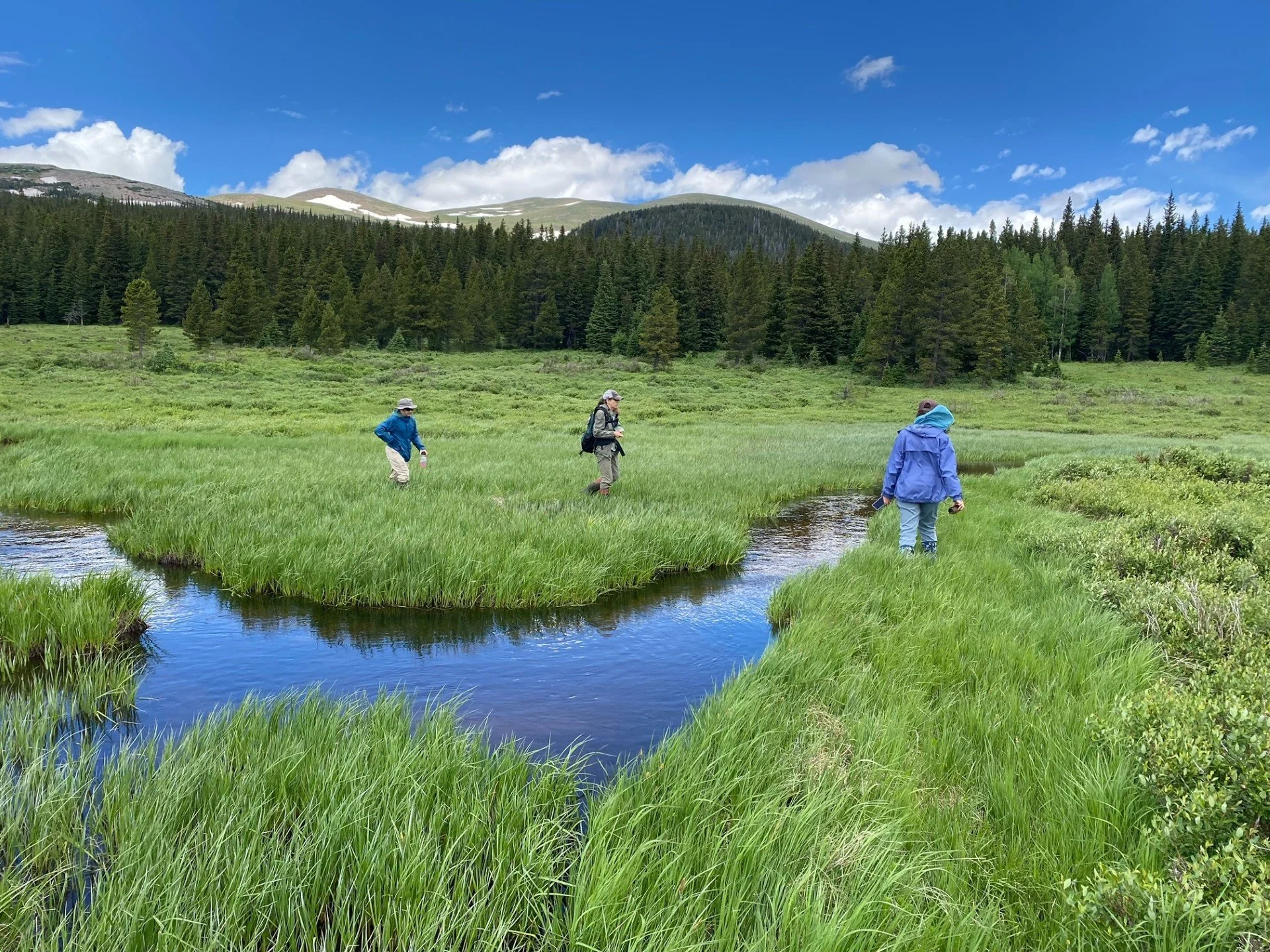
Meadows are important natural defenses against flood, debris flows, and drought. The ability for wet meadows to absorb snow melt and rainfall, slowly releasing it during the summer can help keep stream temperatures stable. Meadows, usually maintained by beavers, also act and natural speed bumps, slowing the progression of sediment downriver, helping to sort sediments from mud, keeping hazardous materials from moving and clogging headgates or culverts downstream. BWC aims to restore the function of many wet meadows, which utilize beavers and beaver-mimicry structures to assist with this function.

Mine Reclamation
BWC has worked with many stakeholders to identify and remediate impacts from historic 20th century hard rock mining. Primarily focused in the Gold Hill Mining District, BWC is actively working to remediate the impacts from several mines, which involves careful engineering and landscape grading to remove tailing piles and waste rock from streambanks, close hazardous mine shafts, and revegetate the areas with native plants and trees.

Low Tech Processed Based Restoration
Low-Tech Process-Based Restoration (LTPBR) is a restoration technique aimed at recovering riverscape health. The "low-tech" part refers to the use of simple designs, often with hand labor or small equipment to mimic the process that woody debris and beavers have on rivers. This restoration is intended to invoke the processes that ultimately restore health, and in headwater streams and meadows it's aimed at creating log jams and beaver dams. Often done in tandem with or nearby a beaver population, this technique can attract beavers to a site and encourage them to build more dams. Or done independent of beavers, LTPBR can be used to initiate the natural process of wood accumulation, sediment sorting, overbank flooding, and bar/pool development - all of which increased natural habitat complexity and encourages geomorphic improvement.
Wildfire Ready Watersheds
Following a wildfire, such as the Waldo Canyon or Cameron Peak fires, summer thunderstorms can create dangerous and life-threatening conditions when rainfall hits a burn scar. In post-wildfire environments, rainfall can cause major debris flows, mudslides, and leave water columns chocked with ash and silt. These are often emergency situations that result in evacuations, serious injury, death, and loss of potable water for municipalities. In order to try and get ahead of situations like this, the Colorado Water Conservation Board has funded BWC to carry out a large-scale watershed wide planning effort called "Wildfire Ready" Watersheds. This planning involves technical fire and flood modeling to predict areas prone to mud slide, debris flows, and fluvial hazards where streams can cause damage when full of floodwaters and debris. The resulting planning will identify known locations where critical assets, infrastructure, and resources could be upgraded or better protected from the impacts of wildfire. Additionally, this will identify projects that can help lessen the severity of a burn or resulting debris flow and help reduce the thread of wildfire and flood on important community and ecologial resources.
Collaborators and Funders


We acknowledge and appreciate that our project areas are on land within the territories of the Ute, Cheyenne, and Arapaho people. Further, we acknowledge that 48 contemporary tribal nations have been connected for centuries to the lands that make up the state of Colorado and many are still here today.